
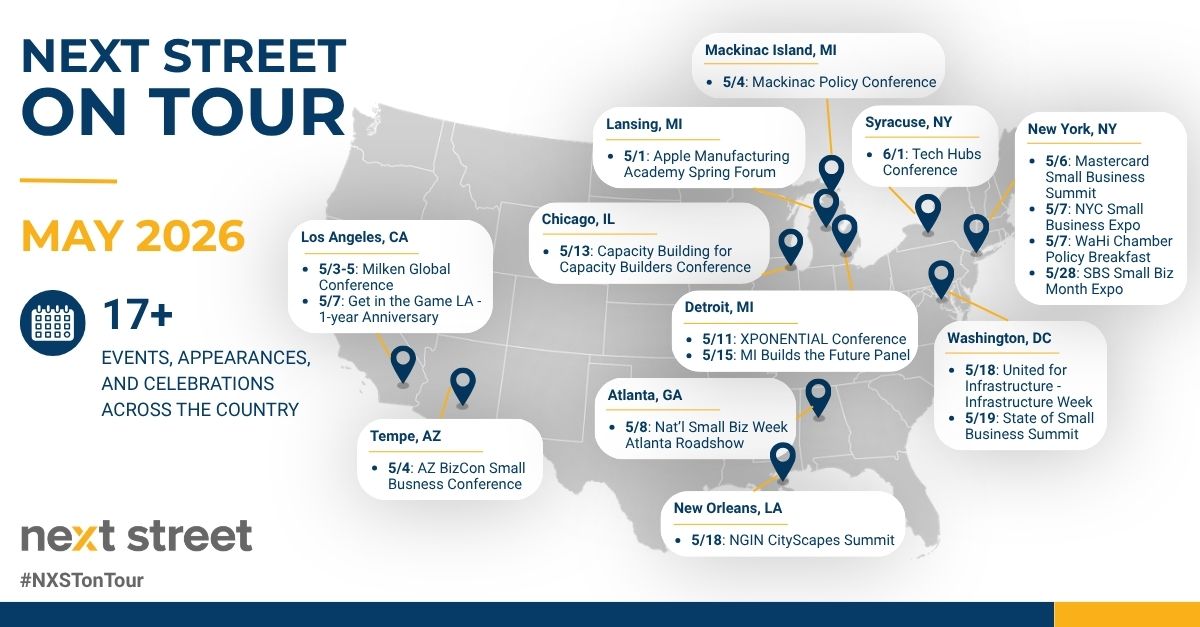
Every Small Business Month, Next Street hits the road. Throughout May, you may have seen us speaking on stages, connecting at expos, celebrating milestones, and showing up in markets across the country. From coast to coast, we were out highlighting the critical role small businesses and suppliers play in powering our economy and strengthening communities. Now that most of us are back on our home turf, here are three learnings or trends that rose to the top for us.
1. Economic development leadership is becoming more local:
Economic growth is about people + place. What works in one region won’t translate directly to another.
States, counties, and regional coalitions are actively leading – taking charge of their economic destiny in this time of change.
2. America is reshoring, onshoring, nearshoring, and friendshoring:
The push for goods and supply chains “Made in America” is widespread and long-lasting, one of the core pillars upon which leadership across the political spectrum agree. BUT it will only work if small businesses are prepared to play a major role.
Robust, resilient supply chains are made up of thousands of smaller suppliers – from the parts manufacturers to the caterers providing lunch for the board meetings.
Many of those businesses are not yet positioned to fully take advantage of the opportunity in front of them. Trillions of dollars are being invested into industry and manufacturing, which means demand is increasing – but the supply side isn’t necessarily ready.
This is where Next Street works – helping those businesses access the capital, contracts, information, and relationships they need to be ready, because this moment can be a real opportunity for inclusive growth.
3. We must talk about AI and technology:
AI is already helping businesses operate more efficiently and serve customers differently.
It’s a huge opportunity for productivity and competitiveness, and those of us serving small businesses can work to lessen the risk that many small business owners face of being left behind without digital capabilities