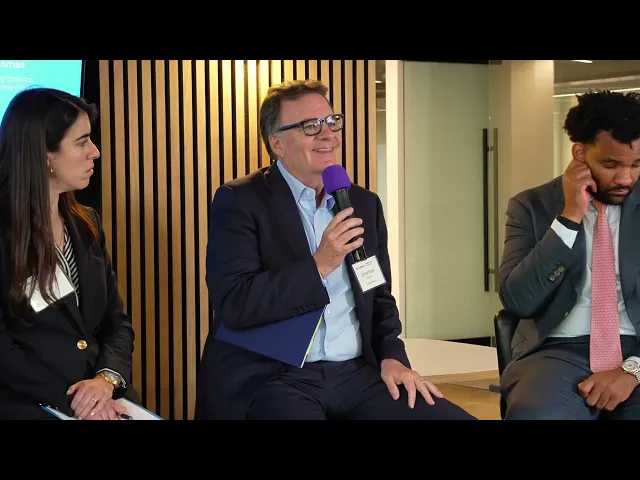

Watch Panel Discussions from Forging Ahead Event
We’re excited to share the key takeaways and full-length panel videos from our recent event, Forging Ahead: Centering Small Businesses Amid Regional Change – Lessons from Los Angeles.
The event brought together business, civic, and community leaders to explore how Los Angeles can rebuild with greater resilience in the aftermath of the January wildfires and ensure that small businesses thrive amid a regional economic transformation in Southern California.
Key Takeaways
Panel 1: Rebuilding Los Angeles – Centering Small Businesses in Regional Development
State of Rebuilding and Regional Development: Panelists noted that wildfire recovery across Southern California has advanced but remains slow due to funding gaps, limited federal aid, and fragmented governance. Some jurisdictions are turning to Enhanced Infrastructure Financing Districts (EIFDs) to bridge shortfalls, but the lack of regional coordination underscores the need for an entity—similar to the former Community Redevelopment Agency—to align land use, permitting, fundraising, and development decisions.
Affordable Housing and Rebuilding Barriers: Recovery is unfolding against a backdrop of acute housing shortages and rising development costs. Wildfire-impacted communities face permitting delays, financing constraints, and political hurdles that mirror broader challenges in delivering affordable and mixed-income housing.
Construction Industry at Capacity: Construction demand in Southern California is at historic highs, yet industry capacity has not kept pace. Small and midsize firms, in particular, face capital, staffing, and administrative constraints that limit their ability to participate at scale. Persistent labor shortages—intensified by immigration policies affecting a large undocumented workforce—continue to increase costs and extend timelines.
Industry Alliances and Joint Ventures: Panelists emphasized that builder alliances and joint ventures are critical for aggregating capacity and integrating small and mid-sized firms into regional value chains. These coordinated approaches enhance collective capabilities, streamline participation, and enable more firms of all sizes to contribute to meeting the region’s construction needs.
Speed vs. Inclusion: Rebuilding efforts revealed an inherent tension between accelerating project delivery and ensuring meaningful participation by small businesses. Panelists stressed that capacity building must occur before crises arise, calling for stronger investments in contractor training, technical assistance, and workforce development to enhance industry readiness.
Calls to Action: The panel called for bold leadership to align efforts around three priorities: expanding public financing tools, streamlining regulations to cut costs, and investing in business and workforce development in the construction industry to strengthen local economic resilience.
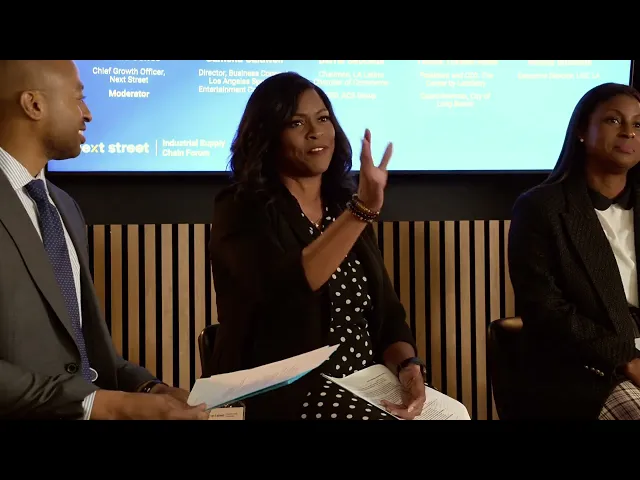
Panel 2: Get in the Game – How Small Businesses Can Benefit from LA’s Major Events
Range of Opportunities: LA’s upcoming mega-events, including the 2026 World Cup and 2028 Olympics, are expected to generate $10–30 billion in regional economic activity, creating opportunities not only for stadium contracts, but also across hospitality, retail, and neighborhood commerce.
Local Activation: Speakers emphasized community-level strategies—such as business routes, hyper-local hospitality hubs, and community watch parties—to direct visitor spending into local commercial corridors rather than solely around event venues.
Business Preparedness: Panelists stressed the need for businesses to prepare early, including through contract readiness for suppliers pursuing procurement opportunities, along with improving digital visibility, customer experience, and company operations for Main Street businesses anticipating increased foot traffic.
Business Support Programs: Organizations across the region are helping firms become “capital-ready” and “RFP-ready”, building the financial and operational capacity needed to compete for event-related opportunities and meet broader Main Street demand.
Collaboration and Access: Cross-sector partnerships—among public agencies, corporations, financial institutions, chambers of commerce, and community groups—are essential for expanding access to procurement opportunities and coordinating neighborhood-level activations.
Long-Term Impact: Panelists emphasized the need for sustained investment to ensure that upcoming mega events act as a catalyst for long-term economic resilience and growth, supporting generational wealth building rather than yielding only short-lived economic gains.
Additional Takeaways from our Opening Remarks
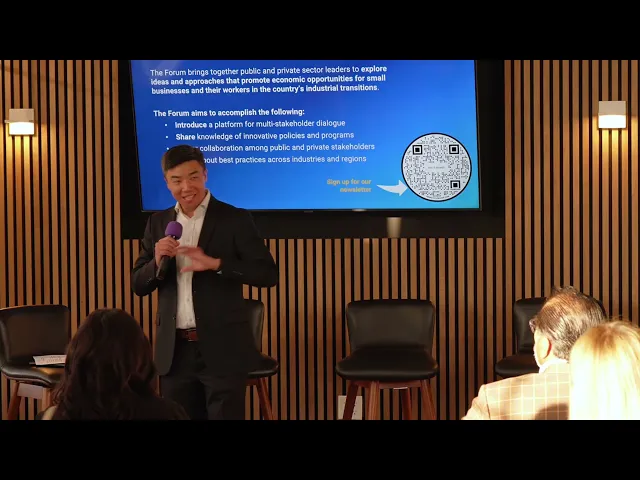
Spencer Lau, Senior Director at Next Street, opened the event by welcoming guests and framing Los Angeles as a region at a crossroads—still navigating recovery from the January wildfires while simultaneously preparing for major economic opportunities with the upcoming mega-events. He emphasized that small businesses are not only recipients of regional change but critical actors and partners in shaping Los Angeles’ future.
Everett Sands, Chief Executive Officer of Lendistry, followed with remarks highlighting Lendistry’s work in Los Angeles and across the country to expand access to responsible capital for small businesses. He also noted Lendistry’s new partnership with Walmart as an example of scaling impact and strengthening the business ecosystem.
Special thanks to our moderators and speakers:
Samona Caldwell, Los Angeles Sports & Entertainment Commission
Jonathan Parfrey, Climate Resolve
Veronica Pugin, Los Angeles County Economic Development Corporation
Darrel Sauceda, LA Latino Chamber of Commerce and ACS Group
Aaron Thomas, Standard Communities
Tunua Thrash-Ntuk, The Center by Lendistry
Nicole Williams, LISC Los Angeles
Learn more
Newsletter: If you’re interested in this subject matter, sign up for the Industrial Supply Chain newsletter here
Work with us: If your organization would like to work with Next Street on opportunities related to the industrial supply chain and how it can benefit small and mid-sized businesses, please contact Andi Crawford
Similar Blogs
News, Voices & Impact
Explore updates, field notes, and stories that showcase our mission and impact.